Water in Your Devon Basement?
When water is spreading across your floors or seeping through a basement wall, Devon Water Restoration delivers fast, around the clock emergency water damage restoration in Devon. Our IICRC certified crews handle the full job from extraction through reconstruction and coordinate the paperwork with your insurance carrier.
If nobody picks up, we're likely helping another homeowner, and we'll call you back within 15 minutes.


Need water damage restoration in Devon? Devon Water Restoration handles emergency water extraction, flooded basements, burst pipes, and sewage cleanup with IICRC certified crews, 24/7 dispatch, and documentation your insurance carrier expects. Call (317) 342-7736 now.
- Services: water damage restoration, basement flooding, sewage cleanup, storm damage
- Service area: Devon, Marion County, IN and surrounding areas
- Response time: Same day for Devon inquiries; 24/7 emergency service available
- Licensed and insured (License #RC21100059)
- Serving Devon, IN since 2018
Schedule Your Free Damage Assessment
Inspections in Devon homes start with a full room by room walkthrough, because mid century floor plans and full basements hide moisture in ways newer construction does not. Walls are measured with non penetrating meters at multiple heights, then confirmed with a penetrating moisture meter where readings spike. Baseboards, trim, subfloors, insulation in suspect cavities, the spaces behind cabinets and appliances, under sinks, around water heaters and washing machines, and the entire basement perimeter and slab joints are checked. A thermal imaging camera maps cold signatures where hidden moisture sits behind drywall, and a hygrometer logs ambient conditions to set drying targets. Thorough mapping is what prevents the most expensive Devon callback we see, a mold colony fed by hidden moisture that surfaces 30 days after a homeowner thought the job was done.
I agree to be contacted by Devon Water Restoration regarding my inquiry.
Devon homes face their share of water problems. Sump pumps fail in the heavy storms that roll through Marion County every spring. Burst supply lines flood basements during the cold snaps that hit central Indiana most winters. Aging clay sewer mains back up into laundry rooms across the older neighborhoods. Whatever caused the water in your home, the response window is the same. Drying needs to start within hours, not days, or you start losing materials that could have been saved.
Mold prevention is a deadline, not a product. Given warmth and moisture, growth begins within days. Fast water extraction, aggressive drying, and antimicrobial application inside that window is how Devon restoration keeps a water claim from becoming a mold remediation project.
Water damage help near Devon should mean actually near: local dispatch, local crews, and a company answerable to the same community it serves. Storm chasers leave after the season. The local number keeps working.
Payment Options That Work for You
A water loss is rarely a planned expense. Our lender partners offer terms that fit a range of budgets so you can move forward while insurance settles. Ask Devon Water Restoration for current rates.
Pay for your project at a later time, but lock in today's pricing. Ideal for homeowners waiting on insurance settlements.
- No payments for 12 months
- No interest if paid in full
- Lock in current pricing today
Divide your project cost equally across 12 months with zero interest. Most homeowners choose this option for predictable budgeting.
- Equal monthly payments
- 0% interest for 12 months
- Simple, predictable budgeting
Spread your investment over up to 20 years with fixed equal payments. The right choice for larger projects or homeowners who prefer lower monthly amounts.
- Up to 20-year terms available
- Fixed equal payments
- Ideal for larger restoration projects
Subject to credit approval. Ask your project lead for current terms and promotions.
Water Damage Cleanup and Repair Services
Our crews handle the drying and the repairs that follow, and you get a photo report of what we found.
Water Damage Restoration in Devon
Serving Devon: full residential water damage restoration covering extraction, structural drying, antimicrobial treatment, and reconstruction. Applied to losses from burst pipes, appliance failures, supply line leaks, and storm intrusion.
Learn moreBasement Flooding in Devon
Basement flooding response including standing water extraction, dehumidification, removal of saturated porous materials, and drying of foundation walls and slab joints. Common in Devon homes with full basements under mid century construction.
Learn moreSewage Cleanup in Devon
Serving Devon: category 3 sewage cleanup performed under IICRC S500 containment protocols, including removal of contaminated materials, antimicrobial treatment, and HEPA-filtered air management. Covers floor drain backups and sewer line failures.
Learn moreStorm Damage in Devon
In Devon, storm driven water damage restoration for intrusion from heavy rain, wind driven water, and ice dam meltwater. Includes moisture mapping, drying, and reconstruction of affected interior assemblies.
Learn moreCommercial Water Restoration in Devon
For Devon addresses, commercial water damage restoration for offices, retail, and multi tenant properties. Scaled extraction and drying equipment with documentation built for commercial insurance and property management workflows.
Learn moreCommercial Flood Damage Cleanup in Devon
For Devon addresses, commercial flood damage cleanup including standing water removal, structural drying, content pack out, and reconstruction coordination for businesses affected by storm flooding or major water loss.
Learn moreCommercial Sewage Cleanup in Devon
Serving Devon: commercial sewage cleanup with full Category 3 containment, contaminated material removal, antimicrobial treatment, and documentation for health code compliance and insurance claims.
Learn moreCommercial Mold Remediation in Devon
For Devon addresses, commercial mold remediation performed to the IICRC S520 standard, including containment, HEPA filtration, contaminated material removal, antimicrobial treatment, and post remediation verification.
Learn moreCommercial Storm Damage in Devon
In Devon, commercial storm damage restoration for water intrusion events affecting commercial structures, including emergency board up coordination, water mitigation, and structural drying through reconstruction.
Learn more
Local Expertise, Real Results
Built on careful moisture mapping, written meter readings, and a job that does not close until the house is actually back together.
Devon Water Restoration brings Devon water restoration on terms property owners actually want. Free inspections. Plain language scopes. Insurance coordination. Manufacturer trained crews. License #RC21100059. The kind of operating discipline a real business should provide.
Devon Water Restoration serves Devon homeowners and property owners across Marion County, responding to burst pipes, basement flooding, sewer backups, and storm driven water intrusion at any hour. Our service area covers Devon and the surrounding northeast side, including neighborhoods like Devington, Forest Manor, Avondale Meadows, and Brendonwood. The crews dispatched into Devon are experienced technicians on a licensed and insured team, led by IICRC certified technicians rather than crew. We have spent years restoring mid century homes across this part of Indianapolis, so the failure patterns in older basements and aging supply lines are familiar territory. That experience is the difference between a job that ends at dry out and a job that finishes with the home actually put back together.
Every Devon project follows the IICRC S500 standard for water damage restoration, with IICRC S520 protocols applied any time mold remediation enters the scope. The work begins with a moisture assessment using thermal imaging cameras and penetrating meters to map where water has actually traveled, not just where it is visible. From there the crew runs controlled extraction, sets structural drying with monitored air movement and dehumidification, and applies antimicrobial treatment when conditions call for it. Materials are verified dry against unaffected baseline readings before any reconstruction begins. That sequence is what keeps a job from coming back as a mold call three months later.
Our Promise
Three commitments shape every call from a Devon homeowner. First, fast emergency response, with crews dispatched day or night because every hour without extraction expands the damage. Second, IICRC certified technicians trained to the S500 standard, using calibrated meters and commercial drying equipment rather than guesswork. Third, a free on site inspection before any work is authorized, and full coordination with your insurance carrier if you have an active claim. Plain answers, plain pricing, and a crew that treats your home the way they would treat their own.
Credentials and Follow Through in Devon
Devon homeowners get IICRC certified crews, thorough moisture mapping, and clear written scopes from the inspection forward, with transparent invoicing waiting at the end of the job.
Around the Clock Emergency Dispatch
Water damage in Devon does not wait for business hours, and neither do we. Our 24/7 emergency line routes straight to dispatch, and trucks roll with extraction equipment, dehumidifiers, and air movers already loaded. A certified lead tech meets you on site, assesses the loss, and starts mitigation the same visit whenever conditions allow.
IICRC S500 Trained Crews
Every technician on the truck works to the IICRC S500 standard for water damage restoration. In practice, that means written meter readings, documented Category determination, and drying verified against unaffected baseline moisture content, not a thumbs up after three days. The certification protects your home, your insurance claim, and your indoor air quality.
Mitigation Through Reconstruction
Most Devon water losses do not end at dry out. Drywall has to be hung, flooring replaced, trim reinstalled, and paint finished before the home is actually livable again. We carry the job from the first extraction pass through the final walk through so you are not chasing a separate contractor to close it out.
Insurance Documentation Done Right
We coordinate with your insurance carrier from the first call, photographing every affected area, logging meter readings, and writing a scope that matches what adjusters expect to see. Clean documentation moves claims faster and reduces the back and forth that frustrates homeowners. We work with most major insurance carriers.
Real Jobs. Real Results.
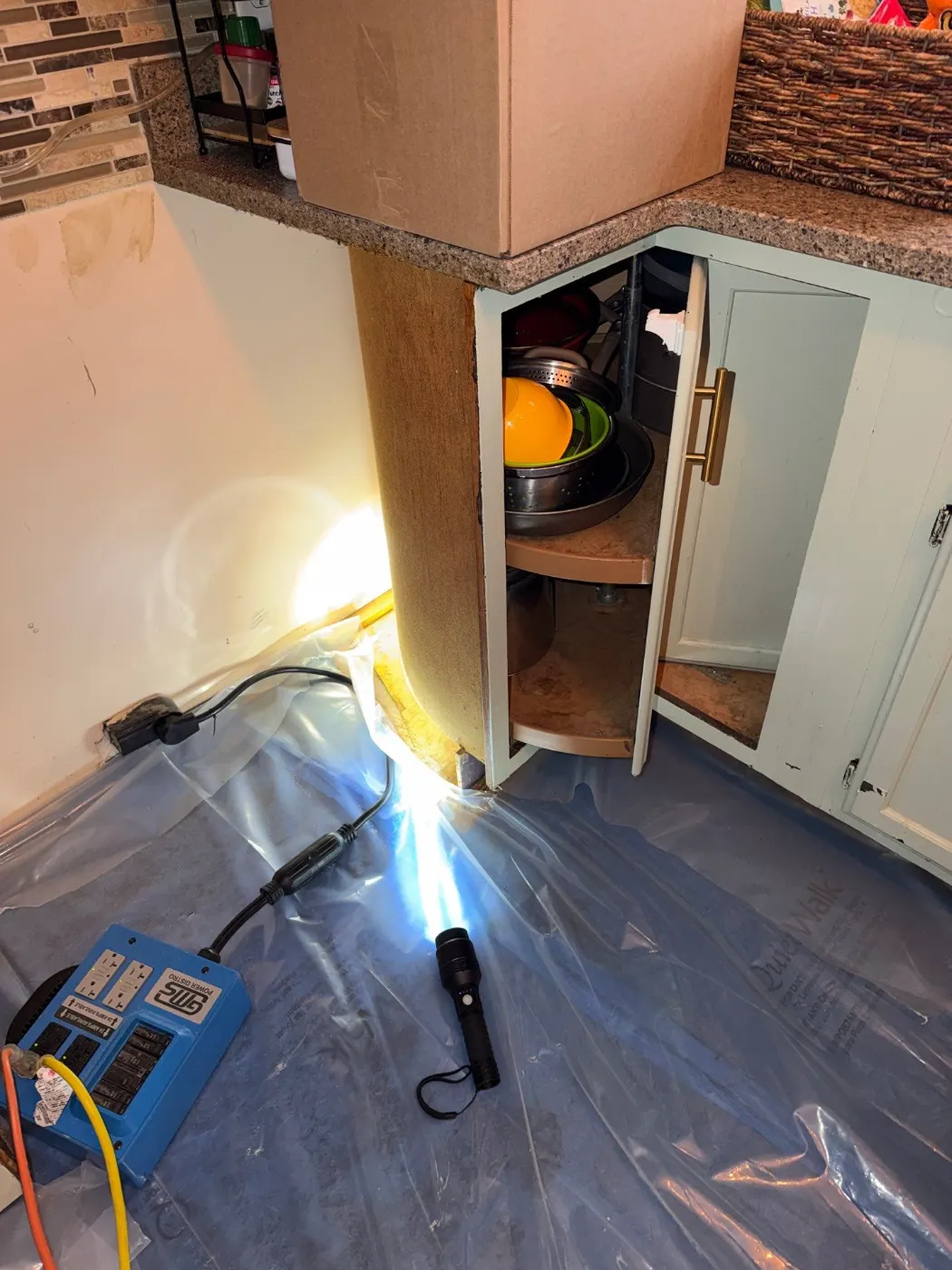
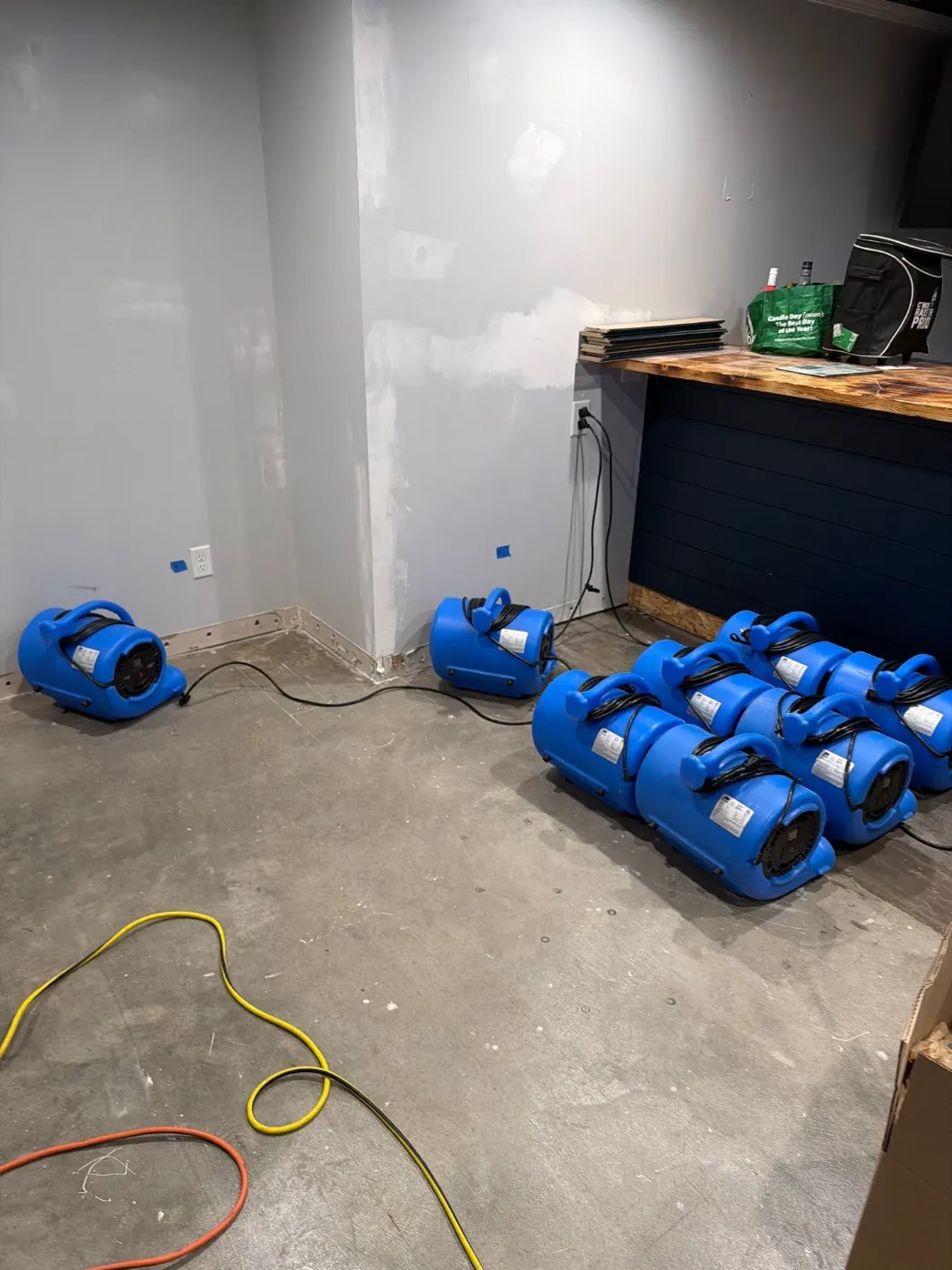
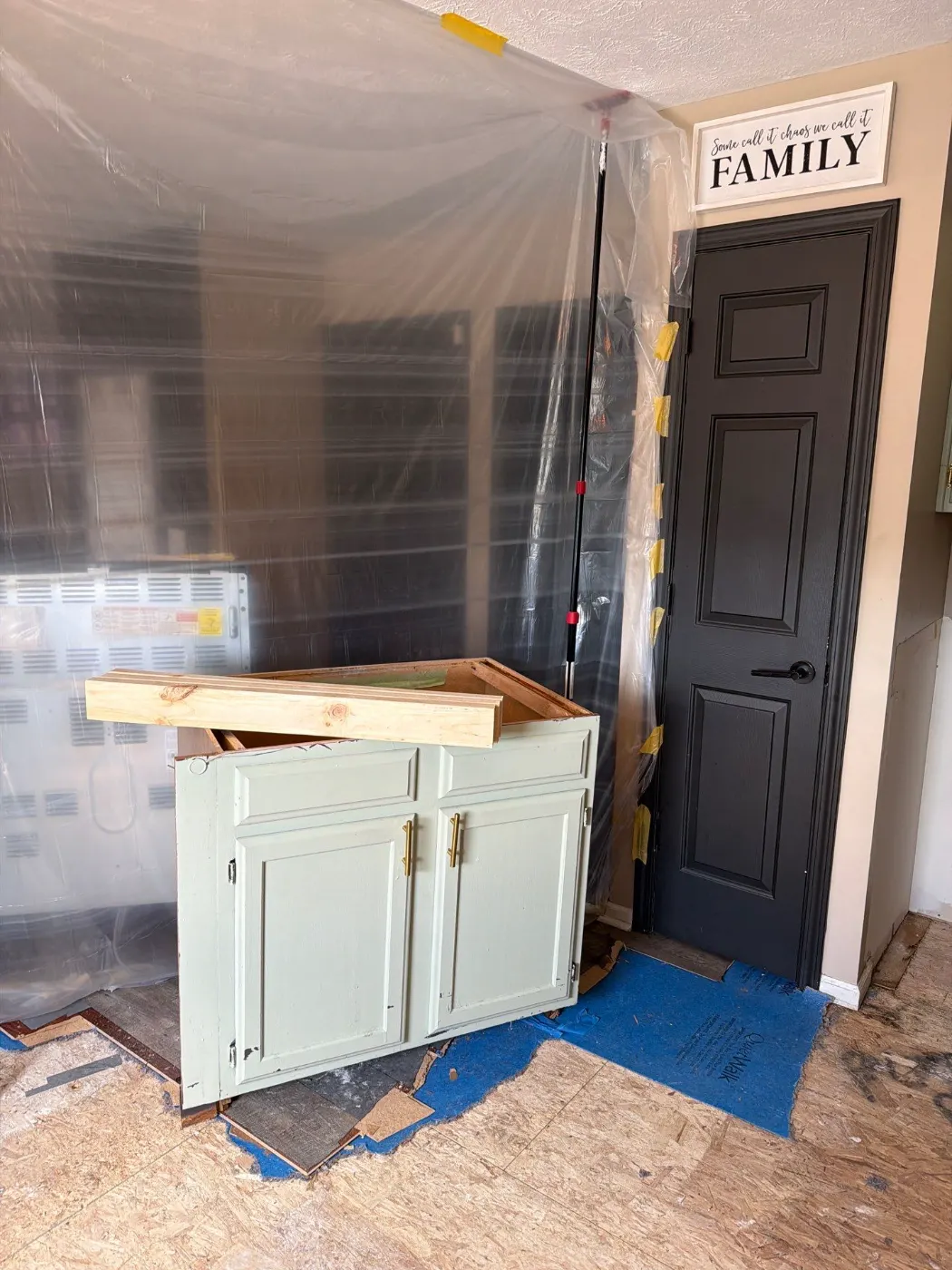
Recent water damage restoration, basement flooding, and mold remediation projects completed across Devon and the wider Marion County service area, documented from initial loss through final reconstruction.
How We Get Your Devon Home Dry
The first phase on any Devon job is moisture assessment and Category determination. A certified tech walks the property with you, runs thermal imaging across suspect walls and ceilings, takes meter readings at multiple points, and identifies the source, whether that is a broken copper supply line, a failed dishwasher, a sewer backup through a floor drain, or storm water pushing through a foundation wall. The water is classified Category 1, 2, or 3 per IICRC S500, and the full scope of affected materials is mapped before any drying equipment is staged. This assessment typically takes one to two hours.
Phase two is insurance coordination and documentation. Before mitigation begins, every affected area is photographed and on video, a written moisture map with logged meter readings is built, and we make direct contact with your insurance adjuster to align the scope with your coverage. Mitigation justification is documented to industry standard so the carrier sees exactly why each step is necessary. Most Devon homeowners never have to wrangle this paperwork themselves, we handle it directly with the carrier while you focus on your family and the parts of the loss only you can decide on.
Phase three is drying execution and controlled reconstruction. Air movers and dehumidifiers are placed based on structural drying calculations, then monitored daily with logged readings until materials hit dry standard against an unaffected baseline. Demolition is controlled, meaning we cut only what cannot be dried in place rather than gutting entire rooms by default. Once the structure is verified dry, reconstruction starts: drywall, insulation, flooring, paint, trim, and finish work to put the home back the way it was. Devon homeowners get a complete restoration rather than a half finished mitigation.
Rapid On Site Dispatch
Trucks roll loaded with commercial water extraction equipment, dehumidifiers, air movers, thermal imaging, and moisture meters. A certified lead tech is on every call so assessment and mitigation start in the same visit. No second trip to grab the right gear.
Category Determination per S500
Every Devon loss is classified Category 1, 2, or 3 under the IICRC S500 standard before any drying plan is set. Meter readings, photos, and a written assessment go into the file. The classification drives containment, PPE, and which materials can be dried versus removed.
Insurance Carrier Coordination
We work with your insurance carrier, build a documented scope, and justify mitigation steps in the language adjusters expect. That keeps claims moving and reduces surprise line items. We work with your insurance carrier, and we make the paperwork side of the loss far less painful.
Drying to Verified Standard
Materials are monitored daily with logged moisture readings until they match unaffected baseline content. Equipment stays in place until the structure is actually dry, not just dry looking. Reconstruction does not start until the numbers say it is safe to close up walls.
Most Common Causes of Water Damage in Devon Homes
Heavy Rain and Saturated Ground
Surface water is a grading problem before it is a plumbing one. A patio pitched toward the house, a downspout ending at the wall, or a flower bed built up above the siding line all deliver rain exactly where it should not go.
Downspouts Discharging at the Foundation
Extensions are the cheapest prevention there is. Get the discharge several feet out and downhill, keep the grade sloping away from the house, and most of the seepage calls stop coming.
Water Heater Tank Failure
Rust at the base of the tank or a damp ring on the slab is the warning most people walk past. When the shell finally opens, the supply keeps feeding it until somebody closes the cold inlet valve, which is why we ask where that valve is on the first phone call.
Dishwasher Leak Under the Cabinet
Kitchen leaks travel along the underside of the cabinet run and drop through the first opening they find. In a Devon home over a finished basement, the first sign is a stain on the ceiling below, a room away from the appliance that caused it.
Window Well Overflow
Water entering at a basement window soaks the wall it runs down and the floor at the base of it. Carpet pad, bottom plate, and the drywall behind the baseboard all read wet, so drying starts by removing what holds moisture against the framing.
Sink Drain and P-Trap Leaks
Under a kitchen or bath sink the joints are hand tight, the trap collects everything, and a slip nut backed off a quarter turn drips on every use. The cabinet floor swells, the base panel delaminates, and the wall behind it stays damp.
What Should You Do Before the Crew Arrives in Devon?
Your first job is to stop more water from coming in, and your second is to keep everyone safe from what's already there. After that, a few small moves protect your floors and furniture until our crew gets to your Devon home.
1. Find your main shutoff
In homes with a basement, the main shutoff is usually on the wall closest to the street. In homes without one, look in a utility closet or near the water heater. Close it and leave it closed until the leak is fixed.
2. Watch the ceiling
If water is coming through a ceiling, keep people out of the room below. A ceiling that sags or bulges can hold a lot of water, and the light fixtures in it may be wet, so turn those circuits off at the panel if you can do it safely.
3. Protect yourself first
If you have to step into wet areas, wear rubber boots and gloves. Take the basement stairs slowly if they're wet, and leave the cleanup of any dirty water to the crew.
4. Save the paperwork
Deeds and family records are hard to replace, so move them to a dry room before anything else. Put them in a plastic bin or a sealed bag if the rest of the house is damp.
5. Protect wood floors and furniture
Wood soaks up water quickly, so wipe off what you can and set furniture legs on foil or small blocks. Pick up area rugs so the floor under them can start to dry, and roll heavy ones onto a dry surface.
6. Leave wet drywall and carpet in place
It's tempting to start pulling things out, but leave wet drywall and carpet where they are. Our crew takes the damage photos and moisture readings before anything is removed, and that record goes into your photo report.
7. Let the air reach wet spots
In rooms with clean water, open closet and cabinet doors so air reaches the wet spots. On a hot, sticky day, keep the windows closed and leave the air conditioning on, since it pulls moisture out of the air.
8. Call us and describe what you see
When you call, tell us where the water seems to be coming from and which rooms it reached. Those two details help the crew bring the right equipment on the first trip to your Devon home.
If you only get through the first two steps before help arrives, that's fine, since the water source and your safety come first. Call us when you're ready and we'll take it from there.
Three Simple Steps
The same three steps apply to a small leak under a sink and to a flooded basement.
Trucks Roll
Dehumidifiers and air movers ride with the crew, sized on arrival. Our line runs 24/7, and dispatch to your home follows within 2 hours. Delay is the only part of this that is genuinely expensive.
Measured Room by Room
Photos, video, and readings are filed before mitigation touches anything. You see the map before we set a single air mover. Moisture content is logged per material and the loss is classified per S500.
Restore & Verify
You keep the documentation for the next owner or the next adjuster. Drying, cleaning, and reconstruction run as one continuous project. The job is done when Devon readings prove it, commonly 3 to 5 days.
What Our Water Damage Photo Report Covers for Devon Homes
Our crew takes the damage photos and moisture readings when we arrive, and those go into a photo report that's yours to keep. It answers the first questions homeowners usually have, starting with what got wet and what can be saved.
The source, in pictures
Whether it was a cracked pipe or a sump pump that quit, the first photos in the report show the source up close and in the context of the room around it. That helps your plumber see the same thing we saw.
Moisture readings, room by room
Each affected room gets readings at several spots on the walls and floor. The report lists those readings with photos of where they were taken, so you can see where the wet area ends.
Pictures from start to finish
Photos go into the report at each stage of the job, starting with the damage the crew found when they first walked in. By the end, you have a visual history of the room from wet to dry.
What has to be removed
When a material is too wet to save, the report says so and shows the readings and photos that back it up. You'll know the reason for every cut before the crew makes it.
The drying log
The report keeps a running log of the drying, with the readings from each visit and notes on the equipment in each room. It's the easiest way to see how close your home is to dry.
A conversation in plain words
The report comes with an explanation. We go over the photos and readings with you and answer questions as they come up, so the moisture numbers make sense to you.
Sharing the report
The report is yours to share with anyone you choose. We document damage with a photo report and walk you through what we found, so you can decide with your insurance company, and your own policy spells out what it covers.
When the crew arrives, they'll start the photos and readings right away, and we'll set a time to walk you through the first results.
Questions Worth Asking Before Work Starts in Devon
Clear answers to these questions make it easier to compare restoration companies in Devon.
Who will be working in my home?
Ask whether the crew works for the company you called or for a subcontractor, and who's in charge on site each day.
How will you show me it's dry?
Ask for moisture readings on the first visit and the last one, so you can see the numbers reach dry standard.
Can I see an itemized estimate?
Ask for every line item in writing. Many insurers price water losses in Xactimate, so an estimate in that format is easier for an adjuster to review.
Does my policy require a certain company?
Ask your adjuster before you sign anything, and read the work authorization so you know what you're agreeing to.
What happens if you find mold?
Ask how mold behind walls or under floors gets handled, and whether that work is priced apart from the drying.
Who handles repairs after drying?
Ask who replaces drywall, flooring, paint and trim once the structure is dry, and whether one company can do both stages.
Indiana Weather Drives Restoration Calls Year Round
Indiana weather drives the bulk of water damage calls in Devon. Spring storms saturate clay soil and overload the combined sewer system, summer humidity feeds mold in any cavity that did not get fully dried, and winter cold snaps freeze aging supply lines until a midnight thaw turns them into a flood. Each season brings a different failure pattern.
Spring Saturation Flooding
Indiana springs regularly drop two to three inches of rain in under an hour, and clay heavy soil across Devon does not absorb it. Hydrostatic pressure builds against mid century foundation walls and pushes groundwater through cold joints, cracks, and around floor drains. When called in, we extract standing water, dry the structure, and contain any contamination from sewer backflow.
Winter Pipe Bursts
Indiana cold snaps freeze supply lines in exterior walls, unconditioned crawl spaces, and uninsulated basements, then a thaw turns a frozen pipe into a 2 AM flood. Older galvanized and copper lines common in Devon homes are especially vulnerable at joints and bends. Our crews shut the affected area down, extract the water, and start structural drying the same visit.
Sewer Backup During Heavy Rain
The combined sewer system serving older northeast side neighborhoods backs up during heavy rain events, sending Category 3 water into Devon basements through floor drains. This is not a clean water loss, it requires full containment, antimicrobial treatment, and removal of porous materials per S500. We handle the cleanup, the disposal, and the documentation for your claim.
Ice Dam Water Intrusion
After a heavy snow, freeze thaw cycles build ice along eaves and force meltwater back under the roof line and into ceilings and exterior walls. The water often travels well past the entry point before showing up as a stain. We use thermal imaging to trace the actual moisture path, then dry the affected cavities before mold has a chance to start.
Every Devon Neighborhood We Cover
The Devon neighborhoods we cover, with notes on the homes in each one and where water usually gets in.
Where we respond near Devon
If you're in Devon or one of the towns closest to it, a crew can be on the way at any hour.
Devon Homes, and What Goes Wrong in Them
The housing stock, the weather, and the failure points we see here.
About Devon Homes
The Devon neighborhood of Indianapolis is dominated by homes built between 1940 and 1969, with an extraordinary 83.4% of its housing stock concentrated in this single mid century era. Homes of this vintage typically carried galvanized steel supply plumbing through the 1950s, transitioning to copper through the 1960s and into the 1970s, both of which are now at or past their functional service life and prone to pinhole corrosion and joint failures. Devon is defined by mid century ranch homes and mid century modern single family homes sitting on large, tree lined lots, with medium sized (three to four bedroom) structures being the most common footprint. Homes of this era in Indianapolis were typically built with full basements over poured concrete or block foundations, making basement water intrusion and sewer backup through floor drains the dominant water damage pattern in the neighborhood.
Where We Work in Devon
We cover homeowners across Devon near Devon Country Club, Lake Mallard, Clearwater Elementary School, North Central High School, Fall Creek Drive (northern boundary), 42nd Street (southern boundary), Emerson Avenue (eastern boundary), Indiana State Fairgrounds (less than 3 miles away).
Surrounding Areas We Serve
Our crew also covers Devington, Devonshire, Forest Manor, Avondale Meadows, Millersville, Brendonwood.
Recent Weather Patterns
Indianapolis receives approximately 42 inches of rain annually, with spring storms frequently dumping two to three inches in under an hour; the city's combined sewer system, which serves older northeast side neighborhoods, regularly backs up during heavy rain events, sending sewage into basements through floor drains. The White River and Fall Creek floodplains run through Marion County, and clay heavy soil throughout the region does not absorb stormwater quickly, causing chronic hydrostatic pressure against mid century foundations and recurring basement flooding across the area.
What Our Crew Sees in Devon
Devon's housing stock, overwhelmingly built between 1940 and 1969, sits on full basements that predate modern exterior waterproofing membranes and were constructed before Indianapolis building codes mandated sump pump installations in residential construction; older homes built before 1980 across this part of the city frequently lack proper interior drainage systems, making them acutely vulnerable to groundwater intrusion and sewer backup during Marion County's spring storm season. The neighborhood is bounded to the north by Fall Creek Drive, placing many properties in proximity to the Fall Creek corridor, a waterway that has historically contributed to elevated flood risk and combined sewer overload events across the northeast side of Indianapolis. Aging copper and galvanized supply lines in these mid century homes are also at high risk for pinhole leaks and joint failures, with slow hidden leaks capable of damaging wall cavities, subfloors, and framing for weeks before becoming visible.
The Devon Area
The Devon neighborhood (Niche defined, smaller residential core) has a population of approximately 2,171, with a median age of 52 and an average household income of roughly $100,000; a large majority of residents (92.7%) own their homes, reflecting a stable, long tenured owner occupant base. The broader census tract area associated with Devon carries a median household income of approximately $43,000,$57,000, indicating a mix of long established homeowners and a renter segment across adjacent blocks.
The Work Behind a Dry Out in Devon
The three phases of a water loss, and what each one involves.
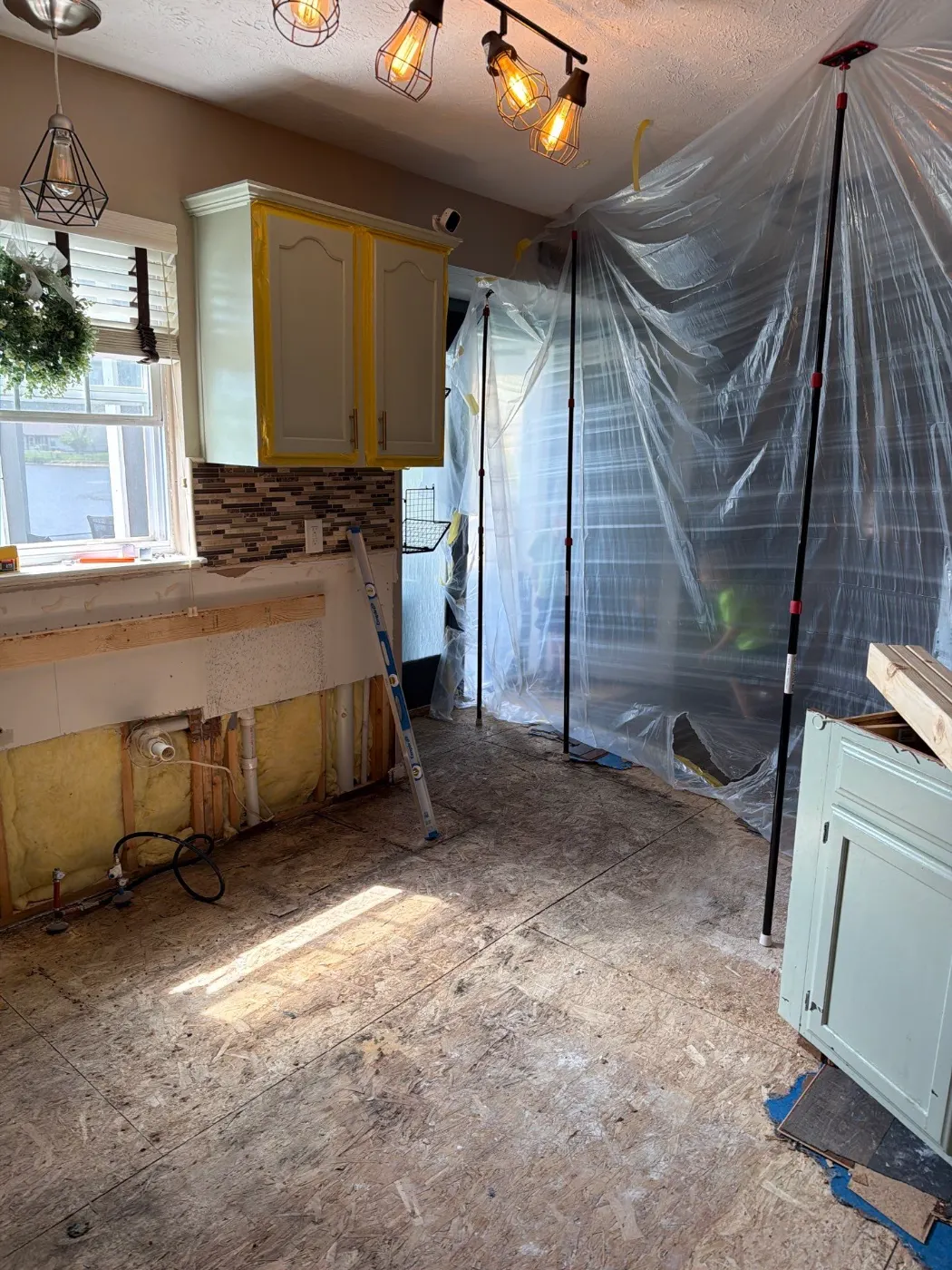
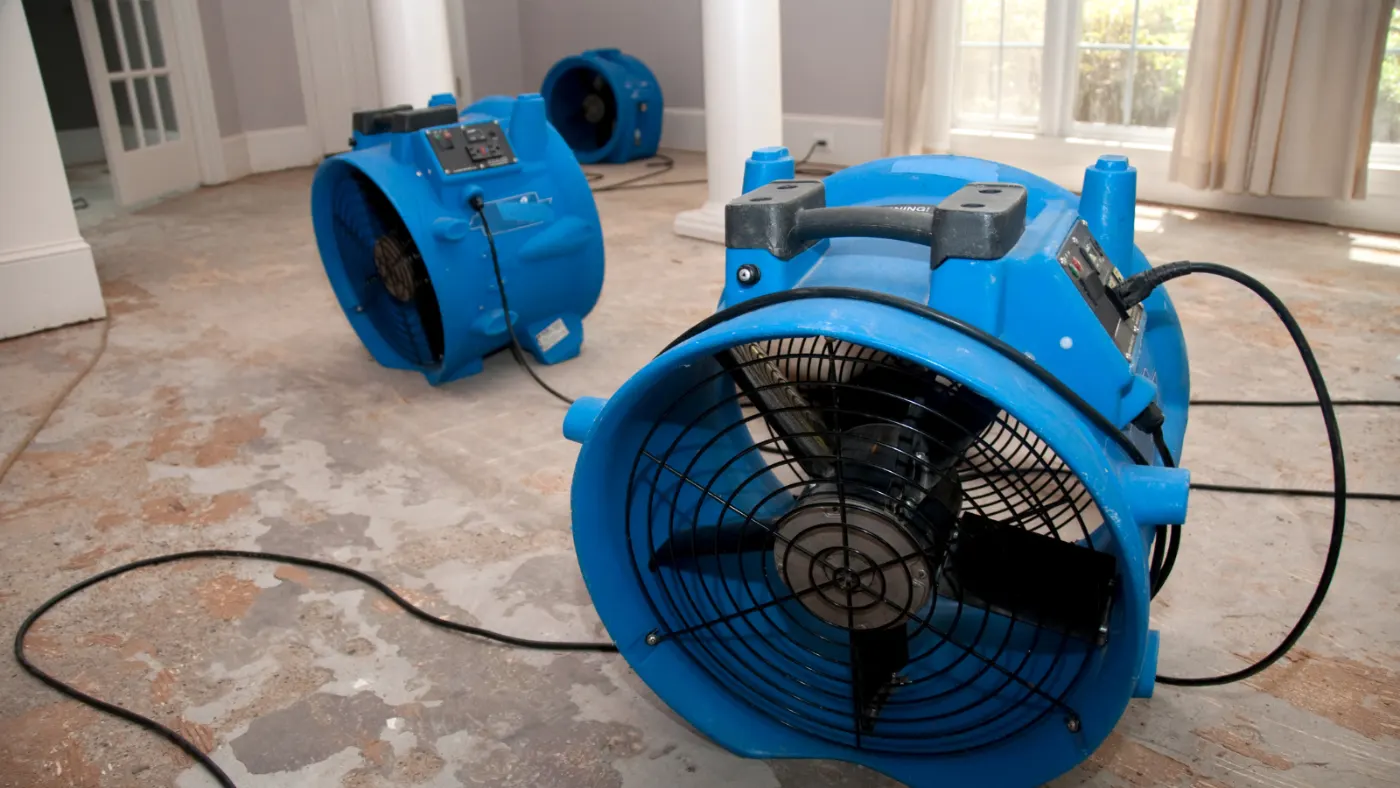
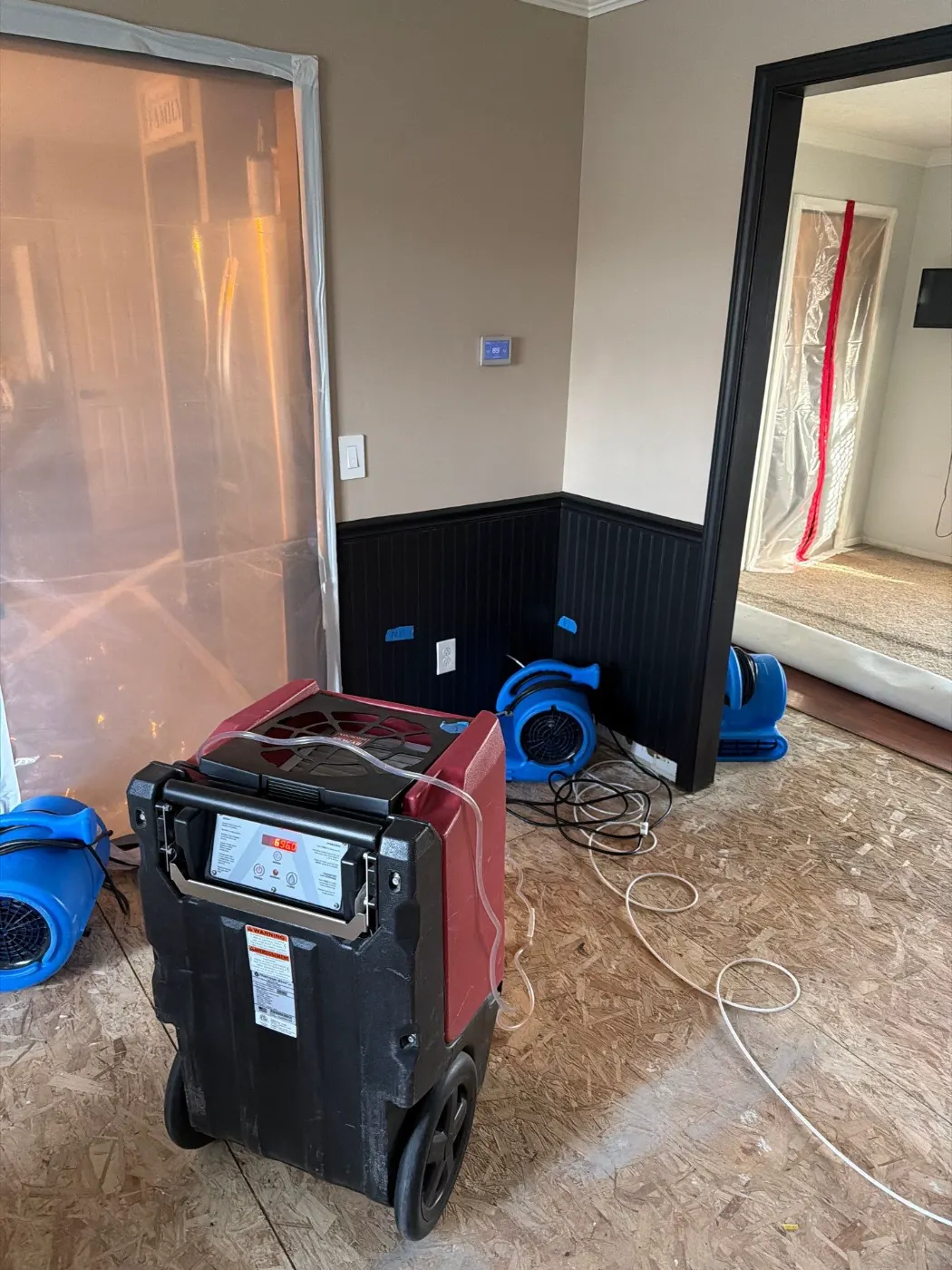
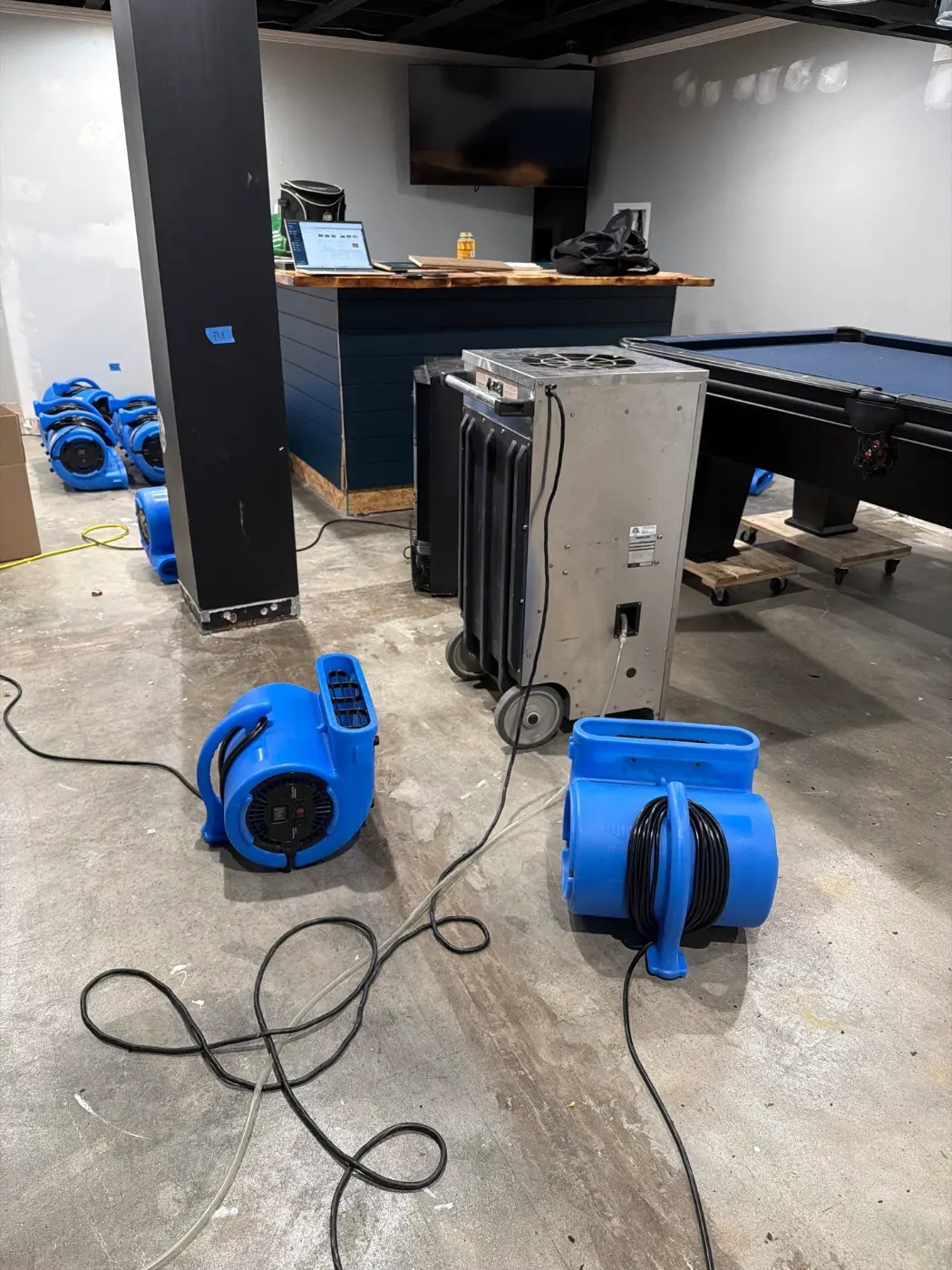
Emergency response on a Devon water loss starts the moment the truck arrives. Crews unload commercial water extraction equipment for standing water, commercial dehumidifiers sized to the affected square footage, professional air movers to push moisture out of porous materials, plus moisture meters and thermal imaging for verification. Extraction begins on site that visit, and structural drying is staged the same day so the clock on mold growth stops as fast as possible. Daily monitoring with logged readings tracks progress until materials hit dry standard. The homeowner experience is built around contained work zones, plastic protection over unaffected areas, and a clear day by day expectation of what is happening in the house. This is the standard sequence for Category 1 and Category 2 losses across Devon.
Specialized containment is the phase that protects health, not just structure. It applies to Category 3 water (sewer backups, floodwater, long stagnant groundwater with biological contamination) and to mold remediation work performed under IICRC S520. Containment means six mil plastic barriers floor to ceiling, sealed entry points, and negative air machines pulling contained air through HEPA filtration before exhausting outside the work zone. Technicians work in full PPE per S520: Tyvek suits, N95 or P100 respirators, nitrile gloves, and eye protection. Contaminated porous materials are cut and bagged for disposal, the remaining structure receives antimicrobial application, and post remediation verification with air sampling is performed when warranted. This is the phase where IICRC training matters most, because shortcuts here turn into long term respiratory and resale problems.
Reconstruction is where the Devon home actually gets put back together. The same crew that handled extraction and drying hangs drywall, tapes, mudds, sands, primes, and paints; replaces flooring (carpet and pad, vinyl plank, hardwood refinish, or tile reset); reinstalls or replaces baseboards and trim; repairs or replaces affected cabinetry; rehangs doors; and coordinates electrical and plumbing finish work as needed. The homeowner deals with one project manager and one schedule from the initial call through the final walk through. The alternative most companies offer is a handoff after dry out to a separate general contractor, which means a second crew, a second schedule, a second billing cycle, and a house that sits torn open in between. That handoff is the part we built our process to avoid.
How to Live Around Drying Equipment in Your Devon Home
Drying is the longest part of a water job, and it happens while you're living in the house. The notes below cover what the equipment does and what the crew needs from you while it runs.
Warm rooms are normal
The rooms being dried often feel warmer than the rest of the house, since dehumidifiers give off heat as they work. That warmth helps the drying, so leave the thermostat where the crew asks.
Leave the settings to the crew
Most units have their own switch or a small control panel. The crew sets those for your rooms, so leave them as they are and let the crew make changes on their next visit.
Keep the room set up the same way
The crew will tell you which doors to keep closed and where to set the thermostat. Drying works by controlling the air in the room, so keeping it the way it was set up keeps the drying on schedule.
Keep cords clear
Cords run along the floor between the outlets and the equipment. Leave them where the crew routed them, and keep rugs and furniture off the cords so they stay cool and easy to see.
Safe paths through the house
Equipment and cords can turn a familiar hallway into a tripping spot, especially at night. Leave a light on along the path you use most, and keep small kids away from the units while they run.
Tell us what you notice
You live in the house, so you'll notice changes between visits, like a new stain or a smell that wasn't there before. Mention them on the next visit, or call us if something seems wrong.
Why the drying starts right away
EPA says it's important to dry water damaged areas and items within 24 to 48 hours to prevent mold growth. That's why the crew sets up drying equipment on the first visit and checks it each day after.
Finishing the dry out
Drying wraps up room by room, so some units may leave before others. When the last readings come back dry, the crew removes the rest of the equipment and walks the house with you.
Call us if anything changes while the equipment runs, like a new stain or a unit that shuts off on its own.
Devon water damage pricing
Mitigation ranges for Devon. Insurance covers most claims.
Water Restoration Questions in Devon
Common questions about drying time and cost, answered for Devon homeowners.
Expert Devon Restoration Crews Available Now
If water is spreading through your Devon home right now or you suspect hidden moisture after a recent storm, call for fast emergency dispatch. The on site inspection is free with no obligation, and we coordinate the documentation with your insurance carrier from the first visit.