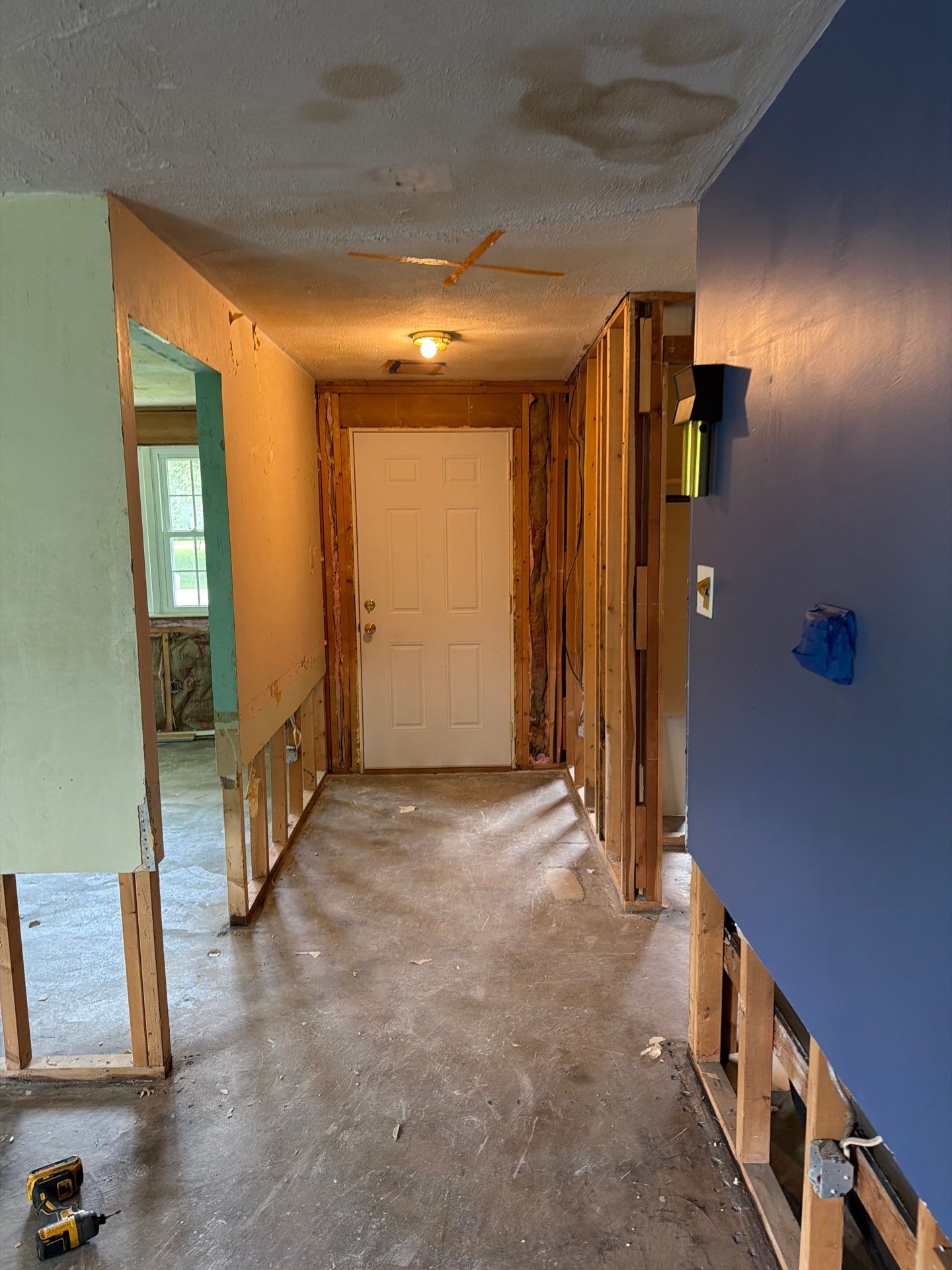
The 7 Water Damage Scenarios Insurance Usually Covers
Standard homeowners policies in Devon cover sudden, accidental water releases. Here is the working list our adjusters approve most often:
- Burst pipes from freezing, pressure failure, or sudden rupture
- Appliance failures like a washing machine hose blowout or dishwasher supply line crack
- Water heater leaks from a tank split or pressure relief discharge
- Roof leaks caused by wind, hail, or fallen tree limbs during a covered storm
- Accidental overflows from sinks, tubs, or toilets (the overflow itself, not always the source)
- AC condensate line breaks when the rupture is sudden, not from years of clogging
- Vandalism or accidental discharge from fire sprinklers or third party damage
If your situation fits one of these, you likely have a claim. Document everything before you touch a single wet item.
What Standard Policies Will Not Pay For
This is where claims get denied. Read carefully.
- Flooding from outside water (river overflow, surface runoff, rising groundwater) requires separate NFIP flood insurance
- Sewer or drain backups unless you bought the sewer backup endorsement (usually $40 to $80 per year)
- Gradual leaks the carrier decides you should have noticed (slow drip behind a vanity for 6 months)
- Mold beyond a small dollar cap, often $5,000, unless mold-specific coverage was added
- Foundation seepage through cracks or porous concrete
- Maintenance issues like a corroded pipe joint or failed caulking
- Damage from a sump pump failure without the specific water backup rider
For sewage events specifically, review our breakdown on sewage backup cleanup and restoration so you know what coverage to ask about before you ever need it.
The 6 Steps That Protect Your Claim
Most denials happen because of what the homeowner did, or did not do, in the first day. Follow this order:
- Stop the source. Shut off the main valve. Photograph the open valve and the source of the leak.
- Photograph and video everything wet before you move it. Get wide shots and close-ups of damaged contents.
- Call your insurer's claim line. Get a claim number in writing. Note the adjuster's name and direct number.
- Call a licensed mitigation company within 24 hours. Your policy requires you to prevent further damage. Devon Water Restoration responds across Devon 24/7 and documents every step.
- Save receipts. Tarps, fans, hotel nights, even cleaning supplies. Carriers reimburse these under emergency mitigation.
- Do not throw anything away until the adjuster signs off or the restoration company has tagged it.
When to File and When to Pay Out of Pocket
- File if: total damage clearly exceeds your deductible by $2,000+
- File if: structural elements, subfloor, or wiring are involved
- Consider not filing if: damage is cosmetic and under $1,500
- Consider not filing if: you have filed two claims in the past three years
- Always file if: there is any chance of mold or hidden moisture
Multiple claims in a short window can raise your premium or get you non-renewed in Devon. Run the math before you call. If you are unsure, Devon Water Restoration can walk through the damage with you first and give you a written scope you can use to decide whether the loss is worth a claim at all.
Coverage Categories Inside Your Policy
Your declarations page splits payouts into buckets. Know which one pays for what:
- Dwelling (Coverage A): structure, drywall, flooring, cabinets, built-ins
- Other Structures (Coverage B): detached garage, shed, fence (usually 10% of A)
- Personal Property (Coverage C): furniture, electronics, clothing (usually 50% to 70% of A)
- Loss of Use (Coverage D): hotel, meals, pet boarding while your home is unlivable
- Liability (Coverage E): if your water damage affects a neighbor (condo unit below you)
Pull your declarations page right now and write the limits next to each letter. A Devon homeowner with $400,000 in Coverage A typically has $40,000 in Coverage B, $200,000 to $280,000 in Coverage C, and roughly $80,000 in Coverage D. Those numbers matter because a major loss can blow through Coverage C faster than people expect once electronics, rugs, and clothing get tallied at replacement value.
Endorsements Worth Adding Before You Need Them
The cheapest time to buy coverage is before a loss. These add-ons are inexpensive and close the gaps standard policies leave open:
- Water backup and sump pump overflow: $40 to $250 per year, usually $5,000 to $25,000 in limits
- Service line coverage: protects the buried water supply line between street and house, around $30 per year
- Equipment breakdown: covers water heaters, HVAC, and well pumps that fail mechanically
- Increased mold limit: raises the cap from $5,000 to $25,000 or $50,000
- Ordinance or law: pays for code upgrades when repairs trigger new building requirements
- Extended replacement cost: adds 25% to 50% on top of dwelling limits for major losses
Call your agent in spring before storm season. Ask for a written quote on each rider so you can compare.
Questions to Ask Your Adjuster on the First Call
The first phone call sets the tone for the entire claim. Write these down before you dial:
- What is my claim number and your direct extension?
- Is this loss being categorized as sudden and accidental?
- What is my deductible on this specific peril?
- Does my policy include Loss of Use, and what is the daily limit?
- Will you accept the mitigation company's Xactimate estimate?
- What is the deadline to submit a sworn proof of loss?
- Are emergency mitigation costs paid separately from the main claim?
Get answers in writing through the carrier's portal or by email. Verbal promises disappear when an adjuster gets reassigned mid-claim.
Red Flags That Get Claims Denied
- Waiting 3+ days to report the loss
- Doing DIY demolition before the adjuster sees the scope
- Hiring an unlicensed handyman who cannot produce moisture logs
- No documentation of pre-loss condition
- Visible rust, calcium buildup, or staining suggesting a long-term leak
- Skipping the IICRC drying standard (carriers want psychrometric readings)
- Turning the water back on after a burst pipe without a plumber's report
- Posting damage photos publicly before the claim is documented
Sudden vs Gradual: The Phrase That Decides Everything
Adjusters use one test more than any other: was this sudden and accidental, or gradual and preventable? A pipe that burst overnight in a January freeze is sudden. A slow drip under your kitchen sink that warped the cabinet floor over a year is gradual. The same physical damage gets paid in one case and denied in the other.
This is why fast documentation matters. If you find a leak, photograph the dry surroundings, the active water, and the source on the same day. That timeline becomes your evidence. For hidden leaks behind finished surfaces, our team uses thermal imaging and moisture meters, the same tools described in our guide to hidden leak detection behind walls.
Cost Breakdown: What Your Carrier Typically Approves
Ranges we see approved on Devon claims when the loss is covered:
- Emergency water extraction and drying: $2,500 to $7,500
- Drywall and insulation replacement: $1,500 to $6,000
- Flooring (carpet, LVP, hardwood): $3,000 to $15,000
- Cabinet repair or replacement: $2,000 to $12,000
- Contents pack-out and cleaning: $1,500 to $8,000
- Mold remediation (if added): $1,500 to $6,000
Your deductible (usually $1,000 to $2,500) comes off the total. Anything under deductible is out of pocket, which is why small leaks sometimes are not worth filing. For a deeper look at job-by-job pricing, see our water damage restoration cost breakdown.